RFM Analysis For Small Business: 8 Checks To Spot Who Is Leaving
Free checklistFrom the video
Read your customer list: spot who is about to leave.
One A4 page. Put it next to your customer list and tick it off before your next campaign goes out. No email needed. Free to print and share, as long as you keep the Systems Ninjas credit on it.
Imagine your partner of five years comes home and finds a note on the fridge: "Nice to meet you. Here's the WiFi password." That is what a business does when it sends "Welcome! Looks like this might be your first time with us!" to a customer who has come in every week for four months. You have just told your most loyal customer that you have no idea who they are. And they'll remember that.
This mistake comes from a blind spot built into one of the most powerful thinking tools I know, one I have used for over 20 years. Below is the fix: a fourth thing to check before any message goes out, and a simple way to read your customer list called RFM.
The ceilingThe triangle that works, until it doesn't
About 20 years ago I came across Dan Kennedy's Marketing Triangle. Kennedy is one of the most respected direct response marketers who has ever lived, and his triangle is simple: the right Market, the right Message and the right Media. I applied it to every campaign and every client, and it worked. I still use it. But I kept hitting a ceiling it couldn't explain. Customers who should have responded didn't. Relationships that should have grown quietly went cold.
Here is why. When Kennedy built the triangle, there was no way to know if someone had visited three times this month or hadn't been back in six weeks. So everyone broadcast the same message to the entire list, at the same time. Spray and pray. The business that wins today is a sniper: it knows who the target is, where they are, and it waits for the right moment.
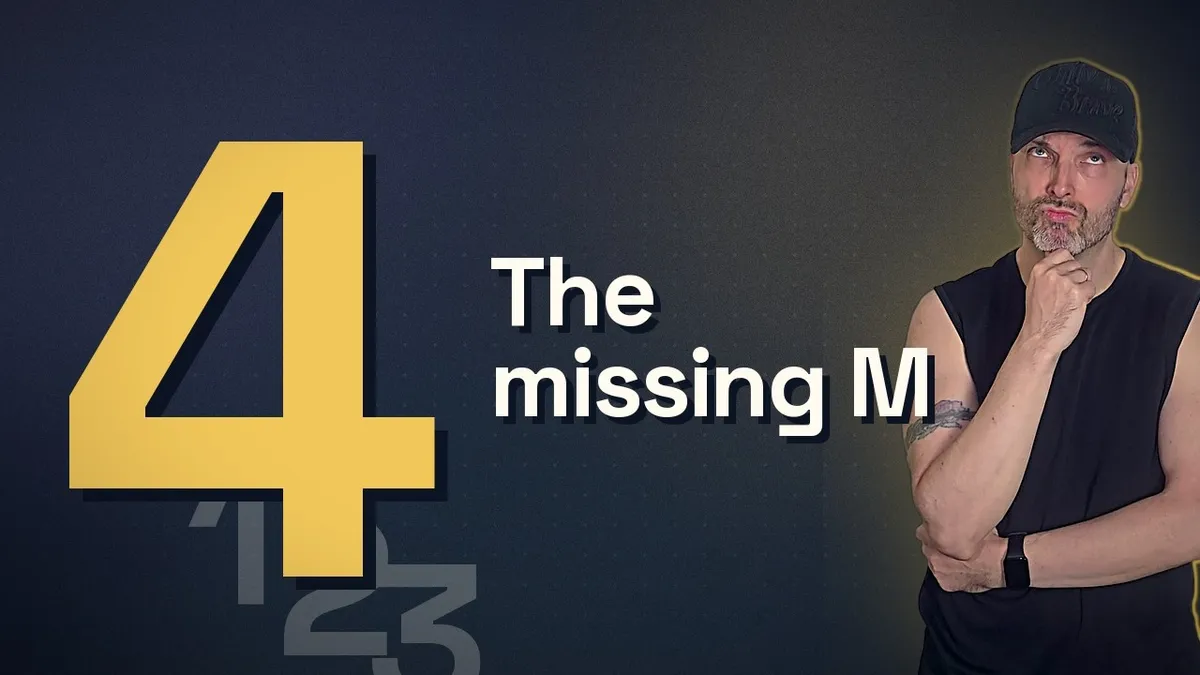
The fourth MMomentum: the right moment in the relationship
The triangle is not broken. It is missing a dimension it was never designed to handle. I call it the fourth M, Momentum: the right timing, combined with the right context, at the right point in the customer's relationship with your business. Add it to the triangle and you have a diamond.
Picture two customers walking into a pizza place on the same day. Maria is there for the first time, on a welcome offer, not yet sure she loves the place. David has come in every week for four months and has his usual order. Maria needs to feel welcomed and needs a reason to come back. David needs to feel valued, like a relationship and not just a transaction. Same day, opposite messages.
Twenty years ago a small business had no practical way to tell them apart. Today the data and the tools exist. The only thing missing is knowing how to read them, and that is what RFM is for.
The 8 checksThree from Kennedy, one from me, four for reading your list
-
1MARKET: you know exactly who you are talking to.
A specific person, with a specific problem, at a specific stage of their life. Not anyone who might be interested.
WhyThe more precisely you define your market, the more powerful everything else becomes.
-
2MESSAGE: it speaks to what they are thinking and worrying about right now.
The key word is relevance. Read your message as that person would before you send it.
WhyNot what you want to say. What they need to hear.
-
3MEDIA: you reach them where they actually are.
Pick the channel your market already uses, not the one that is easiest for you.
WhyThe best message in the world, delivered on the wrong channel, goes nowhere.
-
4MOMENTUM: a regular never gets a first-timer's message.
Before a message goes out, ask where each person is in their relationship with you: a first visit, a regular, or someone drifting away.
WhyThe right market, message and media, sent to the wrong person at the wrong moment, still fails.
-
5RECENCY: you can see when each customer last visited or bought.
How recently did each person visit or buy? A customer who came in last week is far more likely to come back than one who hasn't been back in two months.
WhyRecency tells you who is warm and who is starting to cool down.
-
6FREQUENCY: you can see how many times each customer has come.
Someone who has come in 12 times has a completely different relationship with you than someone who came once, grabbed a welcome offer, and was never seen again.
WhyFrequency tells you who is building a habit and who hasn't committed yet.
-
7MONETARY: you know your biggest spenders by name, and they never feel invisible.
Add up what each customer has spent over the whole relationship. In almost every business a small group carries a big share of the revenue. I call finding them being a Whale Hunter: not to exploit them, but to appreciate them and make sure they never feel invisible.
WhyIf a whale quietly drifts away to a competitor, the hit is brutal. And businesses lose them not to bad service, but because no one noticed they were drifting.
-
8Each type of customer gets its own message.
Put the three together and your list becomes an instrument panel. A first visit gets a warm nudge back. A regular gets a reward that says "we notice you". A regular who has gone quiet gets a re-engagement message BEFORE they are gone.
WhyThe system notices the drifting regular before you ever would, and reaches out before they become someone else's regular.
A worked exampleMaria, David and Chen on the instrument panel
The same pizza place, read with RFM:
- Maria. First visit, used her welcome offer. High recency, low frequency, low monetary. She needs a warm, gentle nudge: something that says we'd love to see you again.
- David. A regular, four months strong. High recency, high frequency, growing monetary. He needs to feel seen: a loyalty reward that acknowledges how consistent he has been.
- Chen. Used to come every ten days. High frequency, high monetary. But he hasn't been back in eight weeks, so his recency is dropping fast. Chen is drifting. Without RFM you would never know. With it, a re-engagement message goes out at the right moment, automatically.
Twenty years ago this precision was only for giants with departments of data analysts. Not anymore. I recently spoke with someone running RFM and automated follow-up for a single popcorn cart. If the popcorn cart is doing it and your competitor isn't, who owns that market in three years?
The dataWhere the numbers come from
RFM only works if you know who is coming and going. The way we capture it is a loyalty card in the customer's Apple Wallet or Google Wallet. They claim it in one tap with no app, and installing it gives you permission to send notifications to their lock screen. They can turn those off or remove the card any time, so the relationship stays honest.
The card records the date of each visit and how much was spent. That alone is enough for a solid RFM picture. It does not record WHAT someone ordered; an open point-of-sale system can sometimes add that, but visit dates and spend are already enough to run circles around most competitors.
Credit where it's dueI didn't invent either half
The triangle is Dan Kennedy's. RFM comes from direct mail. The paper I credit in the video is Jan Roelf Bult and Tom Wansbeek, Optimal Selection for Direct Mail (Marketing Science, 1995), about choosing who to mail. What changed is that the tools to run it automatically, for a business of any size, now exist.
This video follows on from Automated Customer Follow Up: Why One Message Is Not Enough, which covers the follow-up that RFM tells you when to send.
Want to see what a loyalty card in Apple Wallet or Google Wallet feels like?
That is what we build at Systems Ninjas: loyalty cards that record every visit and spend, and follow-up that sends each customer the message that fits where they are. Our demo restaurant's card is on our website, and you can add it to your own phone.
Try the demo card
Uldis Zalcmanis aka Systems Rockstar
Founder, Systems Ninjas · Kuala Lumpur
I build the automation and AI systems businesses actually run on, and I am the person who gets called when one of them quietly stops working.