How To Start With AI In Your Business: 8 Checks
Free checklistFrom the video
How to start with AI in your business: 8 checks.
One A4 page. Use it before you buy a course, and again before you hand anyone the keys to your systems. No email needed. Free to print and share, as long as you keep the Systems Ninjas credit on it.
I moved into a house I had never seen. The first time I stood in front of it, I was there to sign for it. And I build control systems for a living.
If you keep quietly asking yourself how you are supposed to START with all this AI, that house is the answer. Most owners try to learn the tools, and the tools are the one part that does not matter.
There is exactly one thing in here you cannot hand to anybody else. Almost everybody hands that one away, then goes off to learn all the rest. Here it is, with the checks that follow from it.
The houseGiving away control on purpose
My wife found that house, walked it, negotiated it and chose it. My whole contribution was one question: are you sure? That is not lazy. I gave away control ON PURPOSE, in an area where the person next to me would make a better call than I would. I have never once regretted it.
You already do this. You have an accountant. You did not learn tax law, and nobody thinks you are lazy for it. A company where all hundred people are tax experts would be the best-informed company in the country, with nothing to sell. So why does everybody feel guilty about it when the subject is AI?
What I believeEvery business becomes a tech business
I do not see a future where a serious business exists without somebody genuinely competent looking after its AI and automation. That does not mean YOU become technical. It means somebody in your orbit is, inside your team or outside. So the question was never "do I need this". The question is WHO. And almost everybody assumes the answer is "me".
The 8 checksBefore you buy a course or hire anyone
-
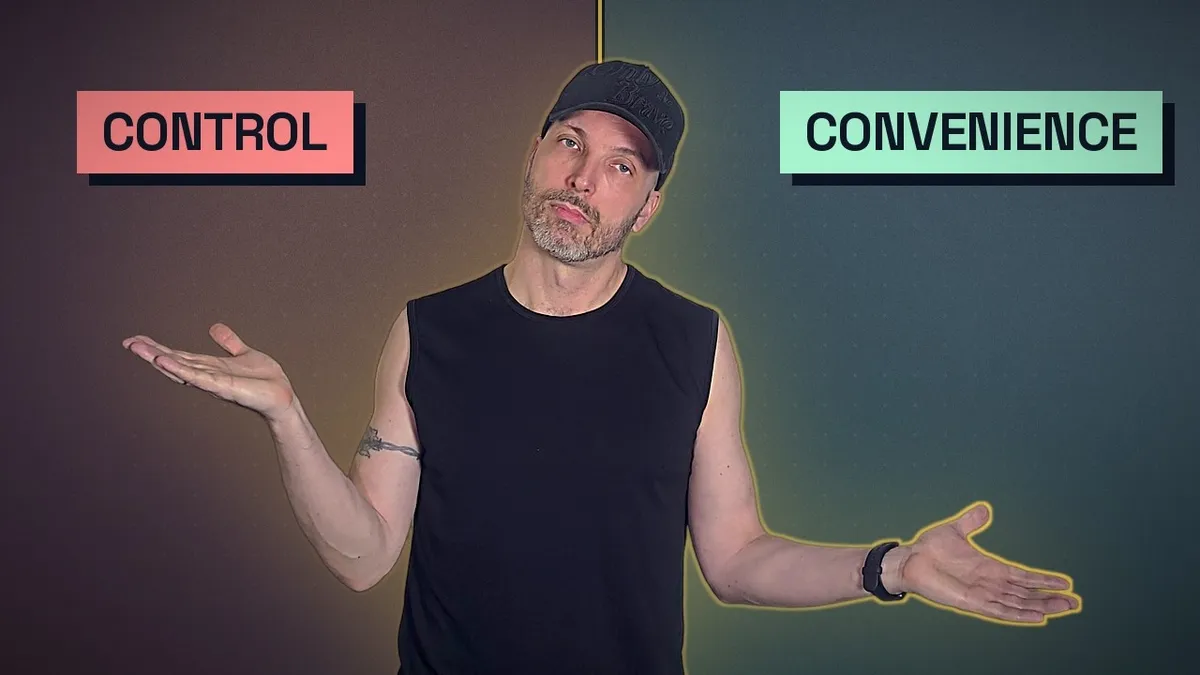
1For each area of your business, you decided: control or convenience?
This is the one thing nobody can do for you, and you answer it one area at a time. Do you want control here, or convenience here? I chose convenience on the house and on tax. I chose control on AI and automation.
WhyBoth are honest answers. Choosing convenience is the same decision you already made about tax, and you made that one without any guilt at all.
-
2If you chose control, you know it costs years, not weeks.
Nobody expects to become a lawyer in a few weeks, yet AI courses promise you'll be an expert in a few weeks. You won't. You'll be busy, with a lot of new words. If you want control, take it: nobody is guarding the door. Just know what you will put down to pick it up.
WhyThe tools are easy. What takes years is knowing where the thing will break BEFORE it breaks. That is scar tissue, and no course sells it.
-
3You stopped trying to find your own bottleneck from the inside.
People will tell you to find your own bottleneck first. I don't think you can, and I don't think you should have to. Give somebody with the expertise the access and the data, and let them find it. The restaurant story below shows why.
WhyThe people inside a business are not stupid. They are just TOO CLOSE. You cannot see a building from inside it, and when everyone in an industry watches everyone else, the whole field drifts to the same blind spot.
-
4If you chose convenience, you picked a door on purpose.
Door one is the toe dip: take one small, real thing and fix it properly, so you watch it work on YOUR business before committing to anything serious. Door two is serious: look at the whole process end to end, find where you leak money and time, and plug the leaks one after another, so everything talks to everything.
WhyDoor one is a legitimate move, but it is one thing, not the whole shebang. Walk through door one and expect door two results, and you will wrongly decide this does not work.
-
5Whichever door, it is built so it can grow.
Ask how the next piece gets added later, without tearing out what is already there. What you start with is never the end.
WhyMost chatbots out there will have to be rebuilt from scratch. Not improved, REBUILT. It is a kitchen somebody finished beautifully and forgot the plumbing, so adding the one thing you need means knocking the whole thing down.
-
6The person looking after it lives and breathes this.
Inside your team or outside, it does not matter. What matters is that they live in it, morning to evening, the way a good accountant lives in tax.
WhyReal competence comes from living in a field, not visiting it.
-
7You asked them: "What will you change about it in month three?"
Ask it before anyone builds anything for you, and watch the reaction.
WhySomebody who builds and leaves has no answer, because in their head it ends at handover. Somebody who does this for real lights up, because they know the first version is never the last. A system that is finished is a system that is quietly dying.
-
8You asked them: "If you disappeared, who else would understand what you built?"
If the person who built it vanished tomorrow, could anybody else understand what they built? Ask it plainly, before you depend on it.
WhyThat is the real hostage situation, and it has almost nothing to do with software. Software you can always pay somebody to rebuild. It is expensive and boring and survivable. What you cannot rebuild is the way your business runs, if it only exists as clicks one person made and nobody wrote down.
A real exampleThe booking page that said closed
For our anniversary I went to book an expensive restaurant, the kind with real money and clever people in it. Ten in the morning: the booking page said closed on every option. On WhatsApp, an automatic reply said they would answer in the afternoon. I pushed through, we went, it was lovely, and the room was almost EMPTY.
Everyone in that building is competent. I am not smarter than them. I saw it in ten minutes from outside, as a customer, because outside is the only place it was visible from.
Door two, explainedWhy everything has to talk to everything
I lived the other version: jumping from tool to tool, busy for eight hours and not more productive, because none of the tools knew about each other. In that setup YOU are the integration layer, carrying context from one window to another all day.
The short versionHow to start, in order
- Don't start by learning the tools. There is always another tool next month.
- Don't start by diagnosing yourself. You are inside the building.
- Decide, for this one area: control or convenience. That decision is YOURS.
- Control: take it, and pay in years. Convenience: pick your door, small and real or whole and connected.
- Find the person who lives and breathes this, and ask the two questions.
Simple in front, complex behind. That is what a good system looks like from where you stand. You don't need to become a different kind of person. You just need to stop trying to be your own accountant.
Chose convenience?
If you would rather somebody just built it, that is what we do at Systems Ninjas: we start with one small, real fix or map the whole process, and build it so it can grow. Have a look, no call needed.
See what we build
Uldis Zalcmanis aka Systems Rockstar
Founder, Systems Ninjas · Kuala Lumpur
I build the automation and AI systems businesses actually run on, and I am the person who gets called when one of them quietly stops working.