Customer Follow-Up Checklist: 7 Checks Before You Blame The Offer
Free checklistFrom the video
Before you say "the promotion didn't work": 7 follow-up checks.
One A4 page. Keep it next to your next promotion and tick it off before you decide it didn't work. No email needed. Free to print and share, as long as you keep the Systems Ninjas credit on it.
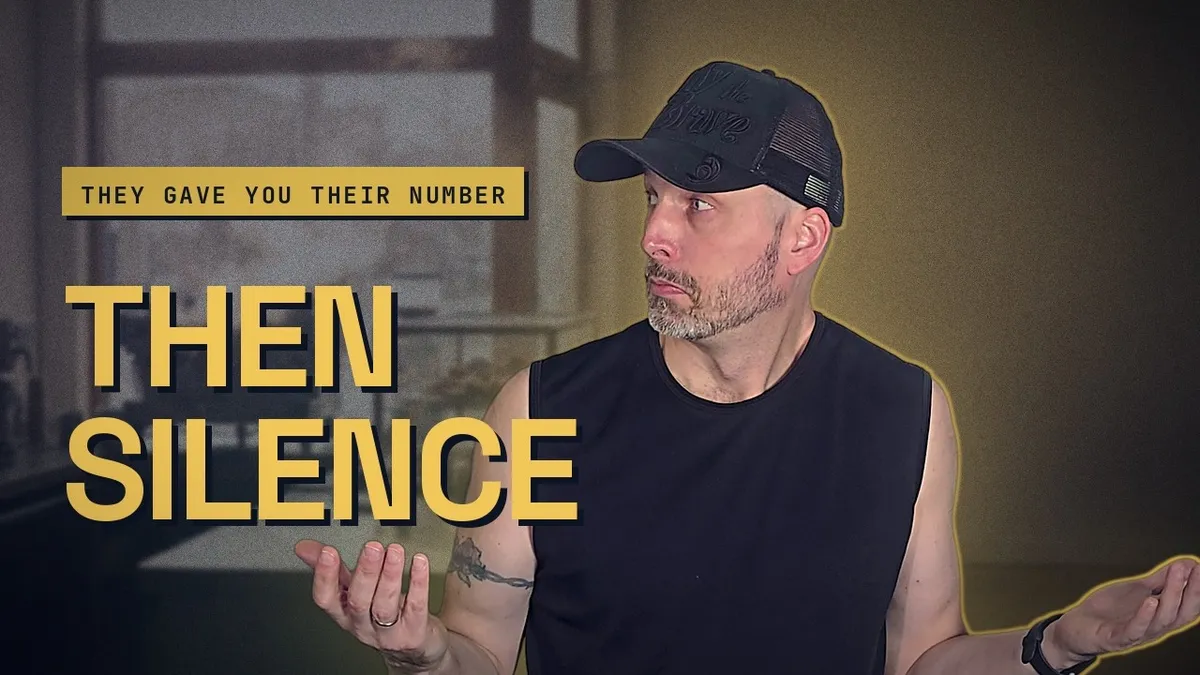
I live in a city full of loyalty programs, and I've signed up for more of them than I can count. Cafes, restaurants, retail shops, wellness studios, pharmacies. And you know what most of them sent me after I signed up? Crickets. Complete silence.
These businesses got my attention, my contact details and my explicit permission to communicate. Then they disappeared. That is not a technology problem. It is a follow-up problem.
If people sign up, grab your offer and then vanish, the fix has nothing to do with your offer or your product. There is a name for what is going on. Below are 7 checks to run before you ever call a promotion a flop.
CricketsA contact list with the door still locked
When did you last use a paper stamp card? Buy 10 coffees, get one free. The card lives at the bottom of your bag for six months, gets washed in your jeans, and disappears before you ever reach stamp number seven.
Here is the uncomfortable truth: most digital loyalty programs are not that far from a paper stamp card. They capture a name, an email, a phone number, and then nothing. Not a reminder, not an offer, not even "hey, your reward is waiting". I see it in every market and every type of business.
It reminds me of a restaurant owner who spends months perfecting the menu, training the staff and designing the space, and then forgets to turn the open sign around. Everything is ready. The customers are literally outside. But the door might as well be locked. That is what a contact list without a follow-up system looks like.
The lawThe SUCK-IT Law: Some Users Consistently Keep Ignoring Things
When I first named it, I pictured a toddler with a mohawk on a tricycle, completely ignoring you the moment you ask them to do something. That is your customer. Not malicious. Not hostile. Just completely unbothered by your first ask.
The law states one simple truth: people will ignore your first ask. Not because they are rude. Not because they hate you or your offer. Not because your product is not good enough. It is not personal.
I've been in business for over 20 years and I still feel it sometimes. You spend days crafting an offer, you send it out, and then silence. It feels like rejection. It isn't. Their boss sends an urgent request, their kid knocks a drink off the table, and your offer slips to the back of their mind. Not deleted. Not rejected. Just buried.
The 7 checksRun these before you call a promotion a flop
-
1You expect the first message to be ignored, and you don't take it personally.
Plan every promotion as if the first message will be missed by most people, because it will. The first ask is just the opening move. The game has barely started.
WhyIt is about life happening to the person on the other end. Your offer is not rejected, just buried.
-
2Before you call a promotion a flop, you have counted how many times, and on how many channels, you told people.
This is the first question I ask any business owner who tells me a promotion didn't work. Write the number down before you judge the offer.
WhyThe answer is almost always the same: "We sent an email." One email. People are living their lives, and one message is not a campaign.
-
3You use more than one channel, each at its own pace.
Email. WhatsApp. Push notifications. Each channel has its own rhythm and its own permitted frequency.
WhyThe simplest way to improve a campaign is almost never a better headline or a bigger budget. It is more touches, more channels, more consistent presence.
-
4"No reply" does not mean "not interested". You keep showing up until they are ready.
Treat silence as "not yet". The gap between when you are ready and when they are ready can be days, weeks or months, so the follow-up has to outlast it.
WhyPeople buy when THEY are ready, not when you are. The business that stayed present gets the sale. Not the best price. Whoever kept showing up.
-
5Your follow-up runs by itself, triggered by what people do, not by someone remembering.
Build a sequence once: a series of automated messages that go out based on behaviour. For example, a confirmation straight away, a friendly reminder a few days later, an "expires soon" nudge, and a last chance.
WhyRemembering who signed up, when, whether they used the offer and what to say next is a second job. Doing that for ten people is exhausting. For a thousand, it is impossible.
-
6If they still don't act, the sequence ends.
Give every sequence a last message, and stop after it. Following up consistently is not the same as following up forever.
WhyNo spam, no harassment. The system made its best effort and moved on gracefully.
-
7The timing fits your business.
There is no rigid day-by-day prescription, because every business is different. A restaurant with a short, expiring offer runs a tighter sequence than a wellness clinic nurturing someone toward their first appointment.
WhyThe principle is the same everywhere. What matters is that the sequence exists, that it runs, and that it never forgets.
A worked exampleMaria and the free pizza, step by step
Picture a pizza place. Maria grabs its welcome offer. Here is what happens next, with nobody pressing send:
- Straight away: a confirmation with her offer details.
- A few days later, if she hasn't used it: a friendly reminder. "Hey Maria, your free pizza is still waiting for you."
- Still nothing: a gentle urgency nudge. "Heads up, your offer expires soon. We'd hate you to miss it."
- Final reminder: last chance.
- Then the sequence ends. No more messages about this offer.
The owner didn't send a single message by hand, didn't check a spreadsheet, and didn't have to remember Maria's name. The system did all of it.
Why keep going? Someone scans the QR code on the menu board and saves the offer, then life happens. A reminder arrives: yes, I'll go this week. Life happens again. Then one evening they just got paid and don't feel like cooking. Suddenly they are ready, and the business that never stopped showing up is right there, top of mind.
The good newsThe bar is shockingly low
The businesses that capture contacts and then go silent are not your competition. They are your opportunity. You don't need a massive budget. You need to show up consistently, automatically, with the right message at the right moment.
Once you have a list of people who bought from you or visited you, the next question is which of them need a reminder right now, and which are about to go cold. That is the next video: RFM Analysis for Small Business: Spot Who Is About to Leave. And if you are wondering whether a stop on one channel should stop all of them, read this piece from the Lab.
Want follow-up that runs by itself?
That is what we build at Systems Ninjas: follow-up sequences that run on what customers do, across WhatsApp, email and loyalty cards in Apple Wallet or Google Wallet, and stop when they should.
See what we build
Uldis Zalcmanis aka Systems Rockstar
Founder, Systems Ninjas · Kuala Lumpur
I build the automation and AI systems businesses actually run on, and I am the person who gets called when one of them quietly stops working.