Which Level Is Your Chatbot? The 4 Levels Checklist
Free checklistFrom the video
Which level is your chatbot? The 4 levels.
One A4 page. Tick every level your bot REALLY does today, and take it into your next conversation about what comes next. No email needed. Free to print and share, as long as you keep the Systems Ninjas credit on it.
Most WhatsApp bots being built right now are what I call FAQu Bots. And yes, I spelled that exactly how I meant to.
They answer questions. They save a little time. And they hit a wall the moment your business needs them to actually DO anything.
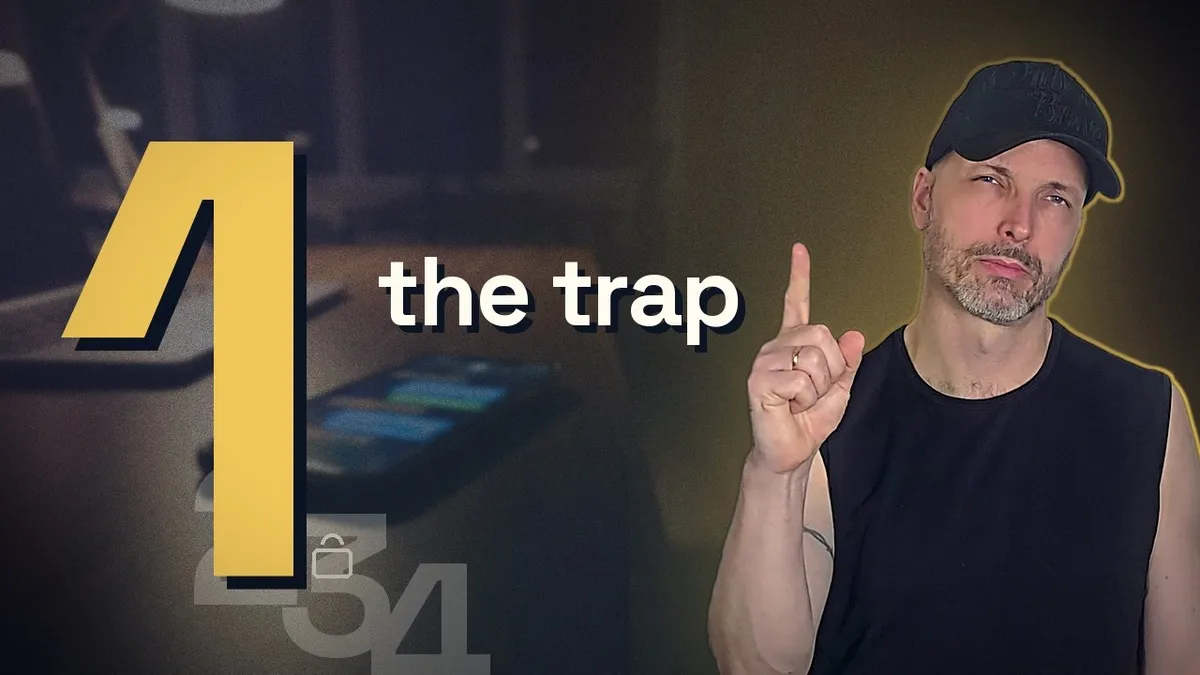
There are 4 levels of WhatsApp chatbots, and most businesses never get past level 1. Here is each level, what it really does, and why the decision you make TODAY about your bot will either save you a rebuild in 12 months, or cost you one.
Level 1, honestlyA searchable PDF with a chat window
A FAQu Bot does one thing: it answers Frequently Asked Questions. You feed it your menu, your hours, your address, your allergy answers, your "where do I park?" script, and it fires those answers back on command. "Do you have gluten-free bases?" "Yes, we offer gluten-free bases for all our pizzas." Clean. Fast.
I'm not going to pretend that has zero value. It saves time and takes repetitive pressure off your team. But here's the cold hard truth: it isn't automation. The moment a customer asks something outside the script, a human has to step in. The moment they want to DO something, like book a table, place an order or change a reservation, the bot has nothing.
And you could build one this afternoon: point any bot-building platform at the FAQ page on your website. So if that's ALL you want, you don't need me. You don't need anyone. Go build it yourself. But if you want your bot to remember people, take actions and grow with your business, read on.
The waiterWhy expect less from a bot than from a good waiter?
Early in my career I worked as a waiter in four and five star restaurants. I was good at it. Not because I was the fastest, and not because I had the best technique, but because I had a system.
I kept notes on our regular guests. Their favourite table. Their preferred wine. How they liked their steak. Whether they were celebrating something. When they walked in, I didn't ask them to repeat themselves. I just knew. They felt seen, they felt valued, and they tipped accordingly.
So why do we expect LESS from our automated systems than from a young waiter on a double shift?
The checklistTick every level your bot really reaches, then the 2 checks
-
1Level 1: It answers common questions.
Opening hours, menu, address, parking, allergies. This is the floor, and most businesses never get past it.
WhyIt saves time, but it can't DO anything. Off-script questions and every real action still land on a human.
-
2Level 2: It knows who it's talking to.
A Context Bot is connected to your CRM: your Customer Relationship Management system, the database that knows who your customers ARE. Is this person in the system? Have they ordered before? New lead or regular? A regular who always orders the same thing gets treated like a regular, not like someone who just found your number.
It also keeps the story together across channels. WhatsApp today, Instagram tomorrow, a phone call next week: every channel pulls from the same source of truth. At this level the bot recognises people, but it doesn't act yet.
WhyWithout that connection, every conversation on every channel starts from zero. Your staff is flying blind, and so is your bot.
-
3Level 3: It does things, and catches the "later" people.
An Action Bot stops being a receptionist and becomes an operator. It books tables, checks real-time availability, creates the reservation in your system, sends the confirmation and handles changes. "Can I book a table for four?" The bot checks, finds a table, and confirms. No human involved, and no missed messages because the manager was busy.
And when someone is interested but not ready to book, the bot has a job. It can offer a digital coupon card that goes straight into Apple Wallet or Google Wallet. One tap, and their contact details are captured. The card is live: it can send notifications based on how recently they visited, how often they come and what they tend to spend. A coupon that follows up on itself, instead of one that ends up in the bin.
WhyContext plus action plus lead capture. The bot knows who it's talking to, does things for them, and refuses to let interested people disappear without a trace.
-
4Level 4: It acts without being asked.
An AI Employee is connected to several systems at once and does things nobody asked for in the moment. A customer's birthday is coming up, so a birthday offer goes out on time. It tracks RFM: recency, frequency and monetary value, which tells you where every customer sits in their relationship with your business. When a regular suddenly stops coming, it notices and acts, with a "we miss you" message or a fresh coupon. After a visit, it follows up and asks how everything was.
One honest note on reviews. When the bot asks for a Google review, ask every customer the same way. Google does not allow asking only happy customers for reviews. Use the private follow-up to hear about problems early, never to decide who gets asked.
WhyThe system responds without anyone staring at a spreadsheet. It works every hour of every day and never treats a VIP like a stranger.
-
5It can grow a level without a rebuild.
You don't need all four levels tomorrow, and you probably shouldn't build them all at once. Built the right way from the beginning, these systems are modular. You start at the level that fits your budget and your operation right now, and add the next one when the business is ready. So don't ask what your bot needs to do today. Ask what your business will need it to do in 12 months, and in two years.
WhyThink of a restaurant kitchen. You don't rip out the foundations every time you need a new piece of equipment. Compare that to the owner who started with a FAQu Bot to save money and now faces a full rebuild, because it was never designed to grow.
-
6You know your 3 buckets: NOW, NEVER, LATER.
NOW: ready today, wallet out as they type. NEVER: tyre kickers, competitors doing research, the wrong number. Don't lose sleep over these. LATER: genuinely interested, just not ready yet. Comparing options, bad timing, or needing one more reason to say yes. Most people messaging your bot are NOT ready to buy today.
WhyMost FAQu Bots answer bucket three's question and then let them walk away forever. No follow-up, no capture, no reason to come back. Bucket three is the one that changes businesses.
At a glanceThe 4 levels in one line each
- FAQu Bot: answers common questions.
- Context Bot: knows who it's talking to, on every channel.
- Action Bot: books, confirms and captures the "later" people.
- AI Employee: acts on its own, at the right moment, without being asked.
The honest bitChatbots work. The clueless ones don't.
Businesses that rebuild the same thing over and over end up saying chatbots don't work. They do. The cheap, disconnected, clueless ones just don't.
There's also a version of this where YOU are the system. Running on fumes, answering the same questions, following up by hand with people who forgot you existed. That's not automation. That's expensive exhaustion with a chat widget bolted on the front.
Building it so it grows with you is a whole conversation on its own: Before You Buy a Chatbot, Ask These 4 Questions. Once your bot is live, 9 Guardrails Every AI Chatbot Needs Before Launch covers how it should behave.
Want a bot that can climb the levels?
That is what we build at Systems Ninjas: chatbots that start at the level you need today and grow to the next one without a rebuild.
See what we build
Uldis Zalcmanis aka Systems Rockstar
Founder, Systems Ninjas · Kuala Lumpur
I build the automation and AI systems businesses actually run on, and I am the person who gets called when one of them quietly stops working.